
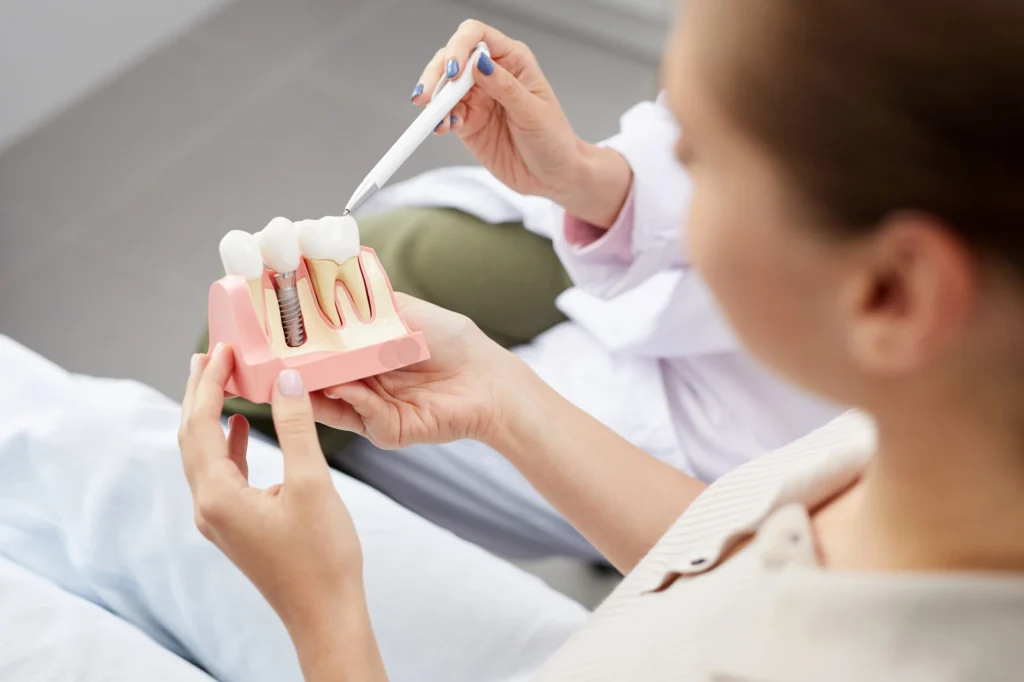
For many people, the idea of implant surgery is enough to postpone treatment for years. The good news is that sedation can make the experience far more comfortable.
If you are considering dental implants in McLean and worry about the procedure, knowing your sedation options helps you plan with confidence. Your dental implant options and your comfort plan are worth discussing together.

Numbing and Sedation Do Different Jobs
Local anesthetic numbs the area where the implant will be placed. Sedation, on the other hand, relaxes you and changes how aware and anxious you feel. The two are often used together, so sedation does not replace numbing.
Sedation Options for Implant Surgery
Two forms of sedation are commonly used for implant procedures.
Oral Conscious Sedation
A medication taken before your appointment leaves you deeply relaxed and often drowsy. You stay responsive but calm, and you will need someone to drive you home afterward.
IV Sedation
With IV sedation, medication is given through a vein, which allows the level to be adjusted as the procedure progresses. The Cleveland Clinic describes it as the deepest form of conscious sedation available in a dental office, and notes that a dental anesthesiologist provides it while your dentist performs the procedure. Your vital signs are monitored throughout.
IV sedation is not general anesthesia. Many patients sleep or remember little, but they are not unconscious in the way general anesthesia involves.
What Happens on the Day of the Procedure
The day typically follows a clear sequence:
- A health review, with instructions about eating, drinking, and medications beforehand
- Arrival with a driver
- Sedation begins, and then the area is numbed
- The implant is placed
- Recovery monitoring before you go home with your escort
Healing happens over the following months. The bone gradually fuses with the implant over roughly three to six months, and bone grafting, when needed, can add six to nine months to the timeline.
Is Sedation Right for Your Implants?
Sedation can help when you:
- Feel anxious about surgery
- Need several implants
- Are having bone grafting
- Expect a longer visit
Some patients do well with local anesthesia alone. The American Dental Association explains in its overview of anesthesia and sedation that dentists who provide sedation need appropriate training, so it is reasonable to ask about the provider’s training and how you will be monitored.
Safety and Recovery
The Cleveland Clinic says you will usually recover from oral or IV sedation within about 24 hours, and side effects can include a bruise on your arm from the IV. Plan a quiet day and have someone stay with you. Once you are healed, the long-term outlook is encouraging, as explained in the post on whether dental implants can really last a lifetime.
Frequently Asked Questions
Will I be completely asleep during my procedure?
IV sedation can leave you deeply relaxed and likely to sleep, but it is not general anesthesia, and your level can be adjusted during the procedure.
Will I feel pain?
The area is numbed before the implant is placed, and sedation helps you stay calm and comfortable.
Do I need a ride home after sedation?
Yes. After oral or IV sedation, you should have someone drive you home and stay with you.

Ready for Dental Implants in McLean? Ask About Sedation at Your Consultation
Our team at Galleria Dental Aesthetics will review your health, explain your sedation options, and plan your implant treatment around your comfort. Contact us or call us at 703-448-1020 to schedule your consultation.